
Overview of the new iron-coated direct seeding technology
Overcoming conventional problems: Resolves the problems of heat generation and delayed germination, and further reduces labor by sowing immediately after coating
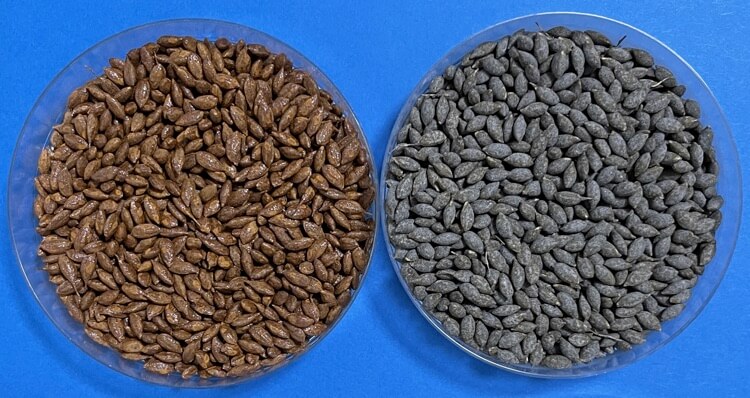
Introduction
Transplanting is a widely practiced traditional and sustainable crop establishment method for rice production in Asia. Due to high economic growth, there is a strong desire to change the cultivation from transplanting to direct seeding, aiming for labor saving.
In these circumstances, wet seeding (a method in which pregerminated seeds are sown in a paddy field after forced drainage immediately after puddling) has been popular in Asia since the 1980s. However, it is widely recognized that infestation by weeds, particularly weedy rice, is serious. The reason behind the use of this method is that when rice seeds are sown in flooded paddies, they float and wash away, making seedling establishment unstable. That is, water seeding is not practical with intact pregerminated seeds.
To solve this problem, iron-coated direct seeding technology was developed and popularized in Japan in 2004. Over the course of the 20 years since then, the benefits of this method have been confirmed, but it has also become clear that there are some issues with farmers using it. Therefore, a new iron coating method was developed in 2022 and is now about to be popularized.
Core problems with conventional iron-coated direct seeding technology
- For direct-seeded rice cultivation, conventional iron-coated seeds (Patent No. 4441645) developed in 2004 have the advantages of being heavy and not floating in water, being prepared in advance of the planting season and stored during the off-season, being resistant to bird damage, and suppressing the occurrence of seed-borne diseases.
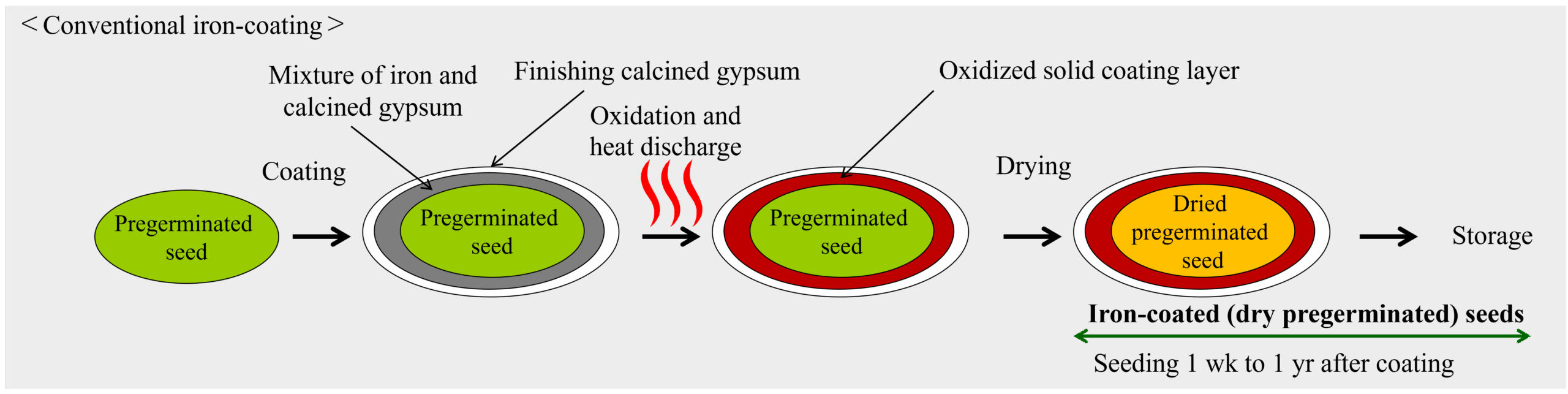
- On the other hand, there were disadvantages, such as the fact that the heat generated by iron oxidation may happen to damage the seed viability, the coated seeds tending to stick together, forming clumps, and the need for long preparation time (mostly a week or more), all of which make the coating process troublesome. In addition, the iron-coated seeds thus prepared take a longer time to germinate and establish crops in the fields than the intact pregerminated seeds because those seeds are dry and covered by hard coating layer.
The solution: New iron coating technology and how it works
- In 2022, a new iron coating technology (Patent No. 7092423) was developed on the basis of the experience obtained during the diffusion of conventional technology in Japan.
- Iron oxide is mixed into the iron to control the heat generation. In addition, calcined gypsum, which has the property of not crumbling even if seeds are sown in water immediately after coating, is selected and used for the coating.
- In the conventional system, iron is oxidized and solidified in the air, then dried, stored, and sown. In the new system, iron is not only oxidized and solidified in the air, but also in the water on the paddy field after sowing.
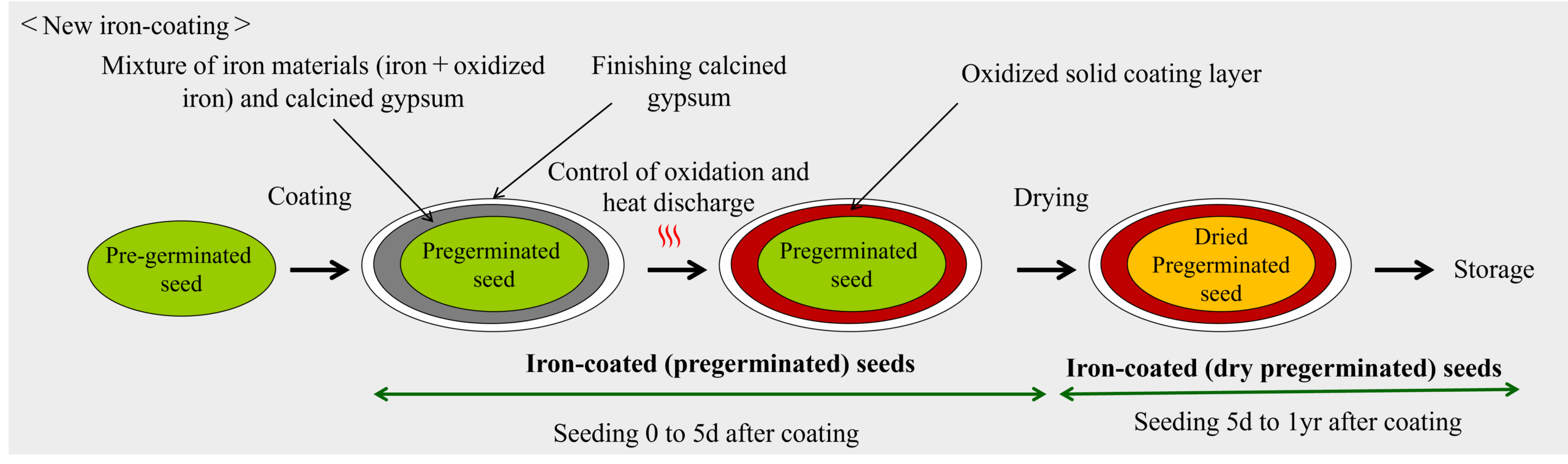
- The new technology brings new benefits in addition to the benefits of conventional technology. However, we need to keep the following in mind:
- While the conventional technology has a long track record of 20 years in the fields, the new technology has only been in development for the last three years, so it should be introduced with caution.
- The suppression of seed-borne diseases by coating might be lower in the new technology than in the conventional one, because of the low concentration of iron. If necessary, disinfect the seeds with chemicals or the hot-water treatment method before coating.
- The new type can also suppress bird damage. Experiments have confirmed that increasing the iron concentration or iron coating ratio increases the suppression effect, but this has not been confirmed in the fields.
The workflow of direct seeding with the new iron-coating technology (for the use of 10% iron premix)
- Seed coating
(1) Preparation of pregerminated seeds
(2) Purchase of coating materials
i. Premix material (premixed iron material (a mixture of iron powder and iron oxide) and calcined gypsum)
ii. Finishing calcined gypsum
(3)Coating work
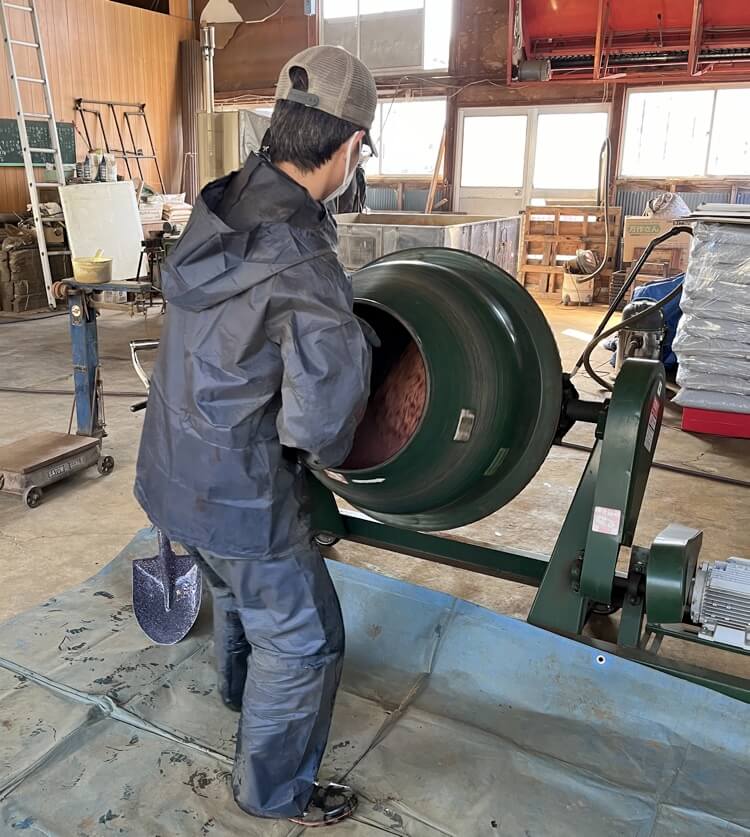
i. Place the pregerminated seeds into a concrete mixer. The working time required for one coating is 15±5 minutes. The seed amount that can be coated in a single coating depends on the capacity of the concrete mixer used (for example 50 kg for 1 hectare). Small amounts (less than 5 kg) can be coated by hand in case a concrete mixer is not available.
ii. If necessary, treat the pregerminated seeds in the concrete mixer with a seed treatment agent of pesticides (taking less than 1 minute).
iii. Add the premix material in three batches, spraying with water as needed (working time: no more than 10 minutes).
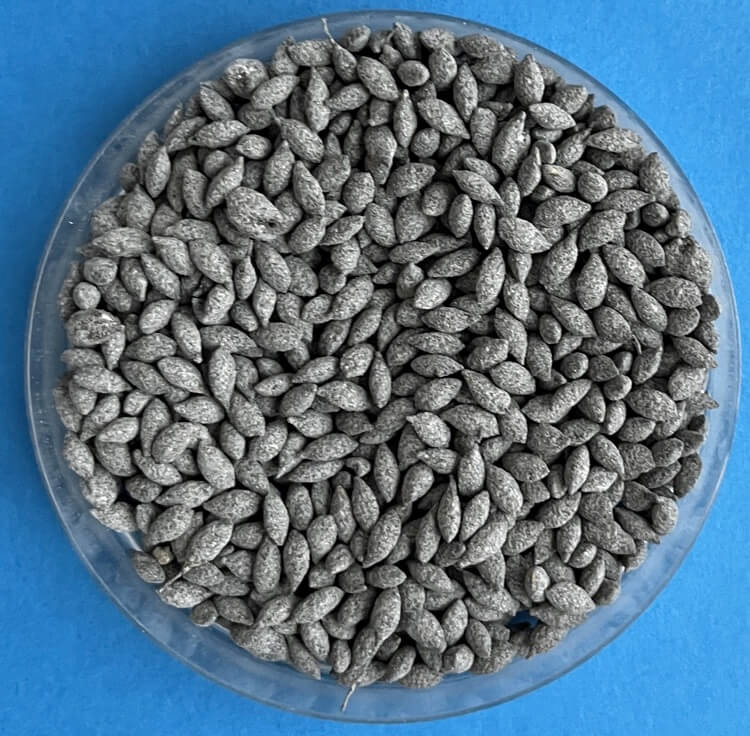
iv. Next, add the finishing calcined gypsum in three batches with no spray of water (working time: within 5 minutes).
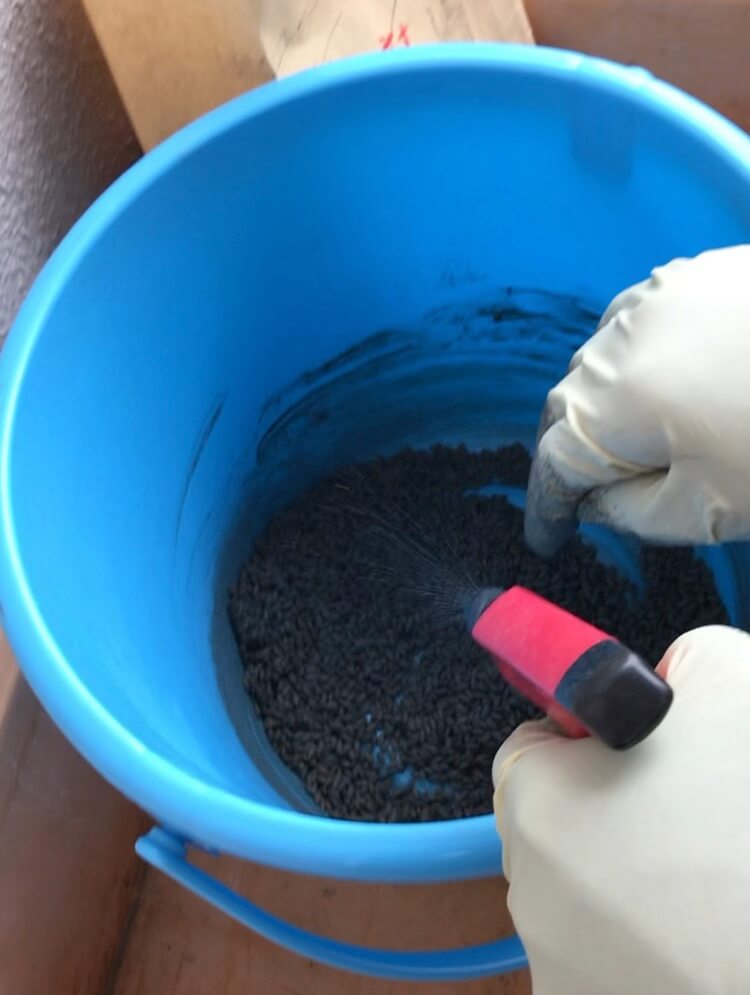
<Caution> Store any remaining materials in sealed plastic bags. Moisture will cause iron to oxidize and turn into iron oxide, and will also cause calcined gypsum to deteriorate.
- Timing of seeding after coating
(1) The superiority of this procedure lies in the following order in respect of labor saving, speed and the stability of seedling establishment, and successfulness of direct seeding: Seeding immediately after or on the day of coating ≥ Seeding on the next day to 5 days later >> Seeding after long-term storage
(2) Seeding immediately after or on the day of coating
This is the most efficient, low-cost, easy, and reliable method. The coated seeds are removed from the concrete mixer, placed in containers or buckets, and transported to the field where they are sown. The germination and emergence are reliable and quick, making it suitable for beginners of direct seeding and large-scale growers alike.

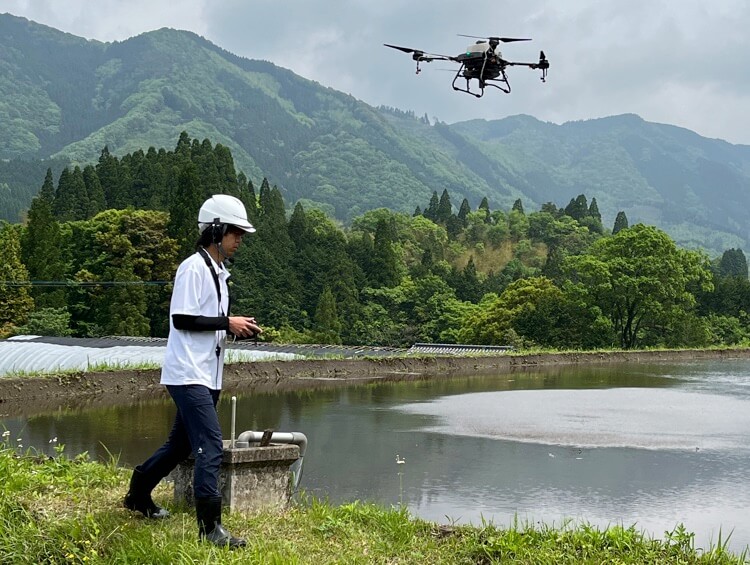
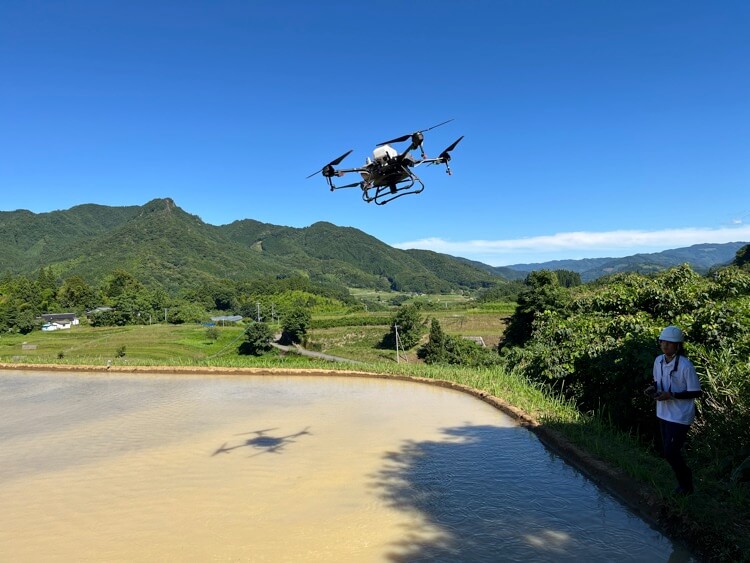
The farmer prepares the germinated seeds and paddy fields. The drone operator visits in the morning of the day, receives the germinated seeds, coats them, and then sows them. The puddling water is not drained away at sowing.
(3) Seeding on the next day to 1 week after coating
Pack the seeds into mesh bags to a thickness of 10 cm or less. Since pregerminated seeds contain a lot of moisture, lightly stir the seeds only once in the evening of the day of coating to remove excess moisture trapped inside the bags (which would be condensed into water). After that, leave the seeds in the shade for several days until seeding. This is useful when seeding is delayed, allowing for greater flexibility in work.
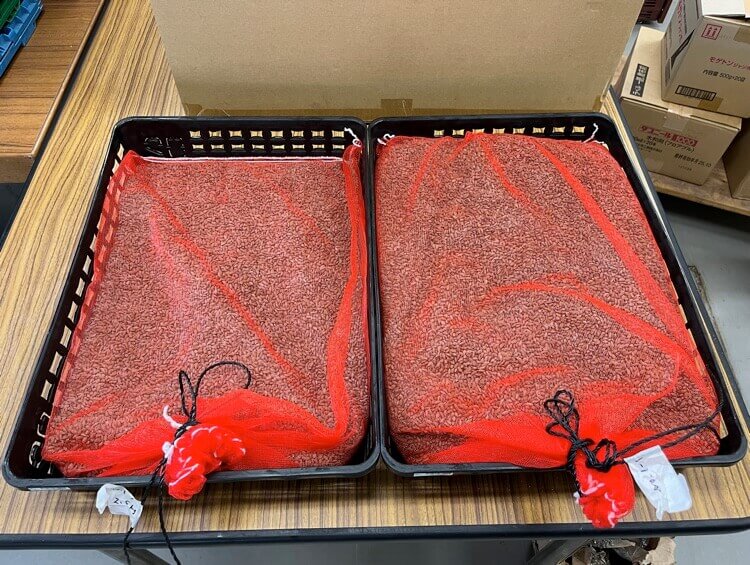
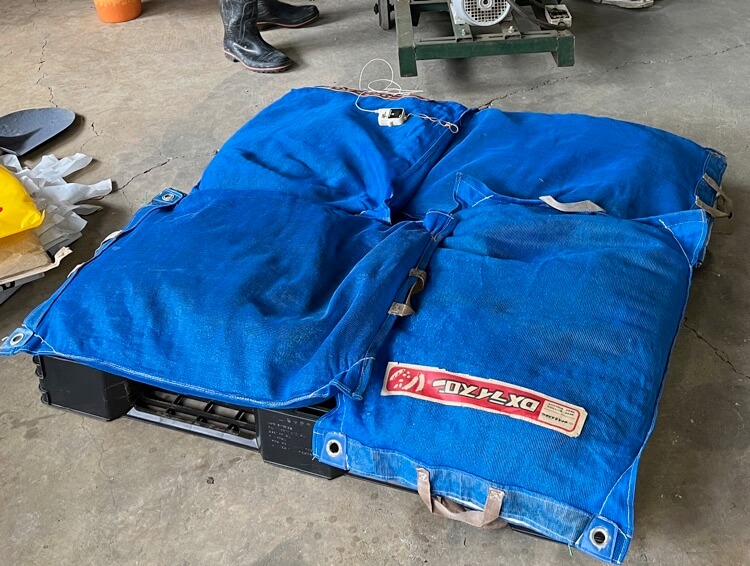
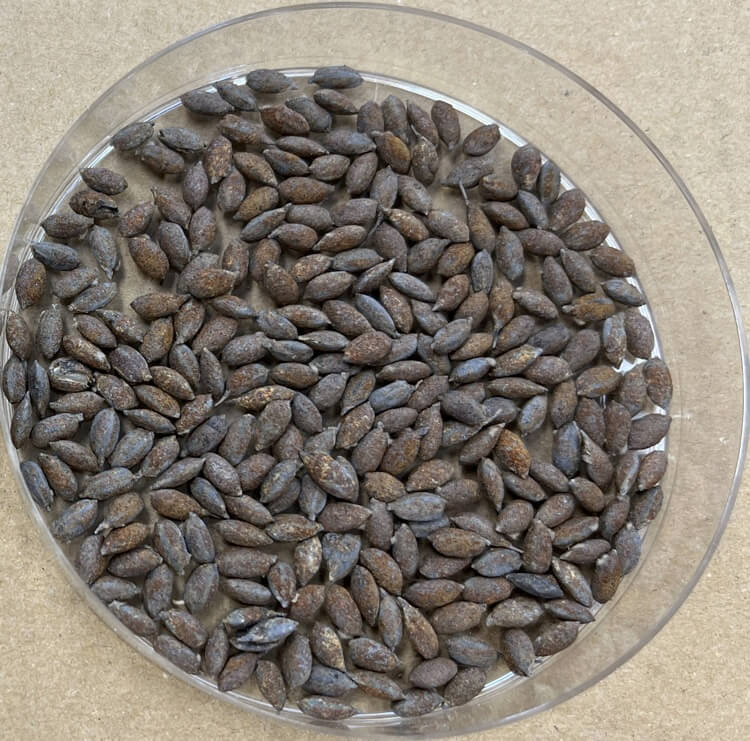
When the seeds are not to be sown on the day of coating, pack them into mesh bags less than 10 cm in thickness. The iron-coated seeds are rusted in the bags. The color of the rust depends on the iron concentration in the coating layer.
(4) Seeding after long-term storage
If seeding is delayed by more than a week, remove the seeds from the mesh bag, spread them out, and air-dry them (or dry them with hot air at 35°C) and store in a shady dry place. This method is used not only when seeding is delayed but also when preparing coated seeds in advance (which is the same as the conventional method). Although preparation of iron coated seeds in advance is the same as conventional methods, there are advantages: no need for additional water spraying for oxidation, little damage of the seeds by heat, no solidification issues after finishing, and less time required for germination and crop establishment. However, the coating layer is slightly weaker when the iron concentration is low.
- Cultivation management
Water seeding (pinpoint flooding) of new iron-coated seeds. To achieve a single application of herbicide, carefully level the soil and puddle, and omit herbicide 1. This method utilizes the heat-retaining effect of water, making it suitable for sowing in low temperatures.
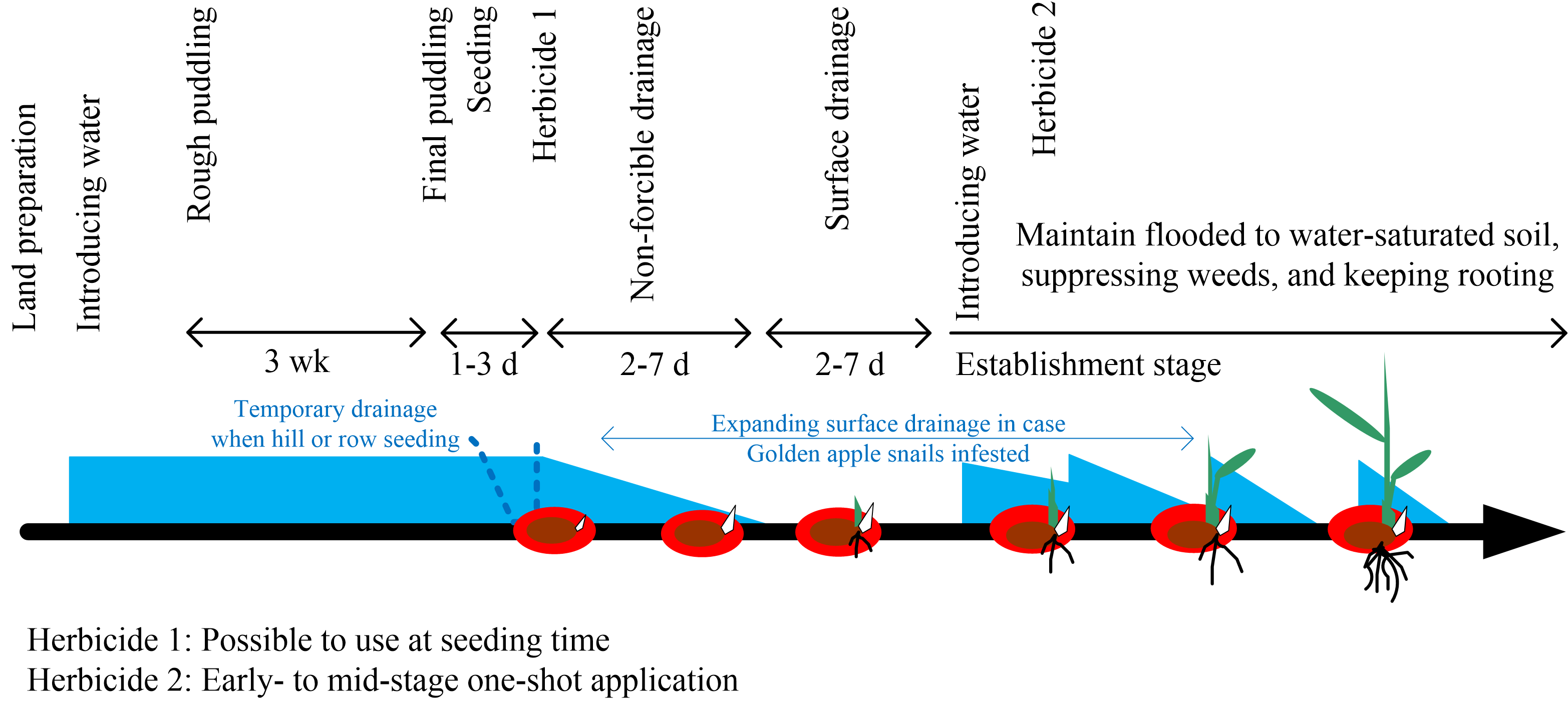
Water seeding (delayed flooding) of new iron-coated seeds. This system focuses on mid- to late-season herbicides. Drying out the water also helps control ducks, rice water weevils, and apple snails. To use a single herbicide system, omit Herbicide 1.
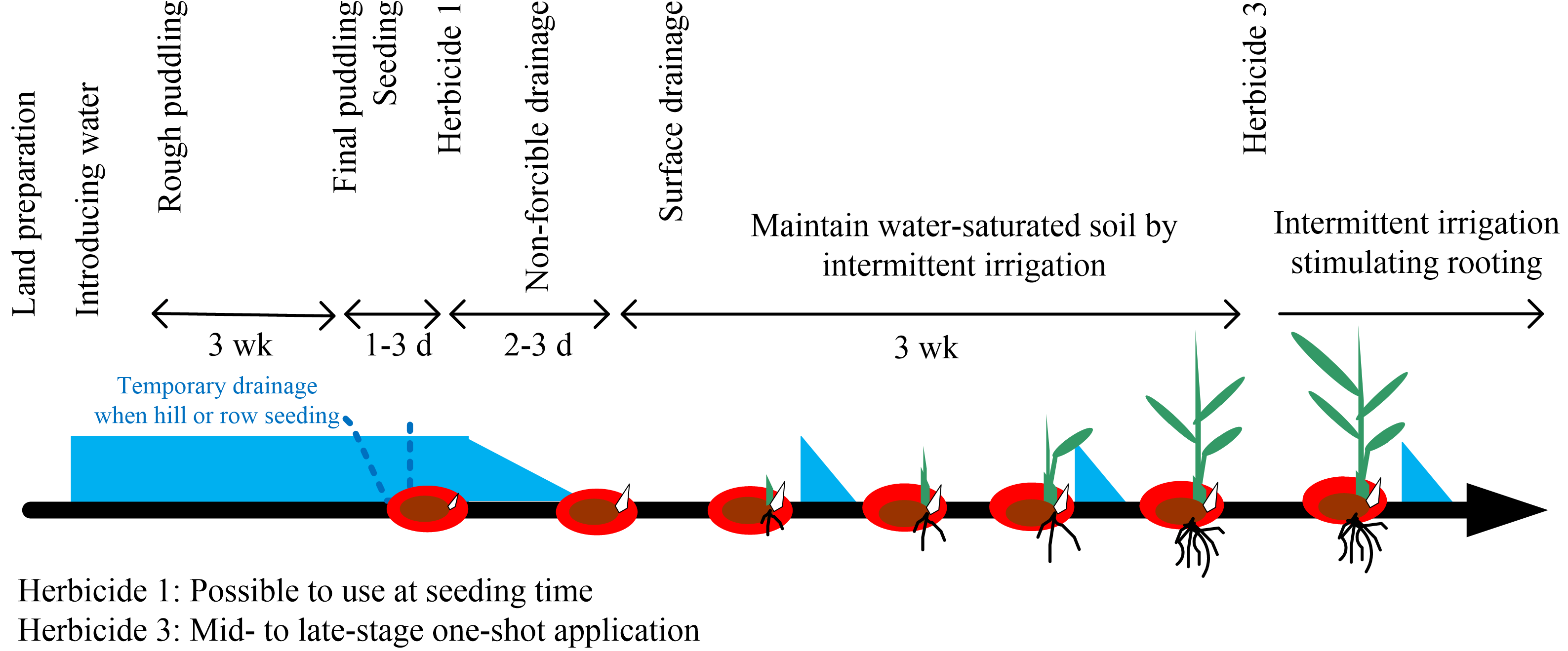
- Cultivation tips: Keep the soil slightly dry to reduce lodging. Continuous watering weakens the root development and can lead to lodging. Rather than precise water management, a slightly relaxed approach (i.e., add water when it dries and leave it alone when it rains) is more appropriate. This reduces greenhouse gas emissions and improves soil bearing capacity.
Installation procedure
- This cultivation technology is protected by patent rights in Japan and in China. Although there is no restriction for the use of new iron coating technology in the other countries, the testing and deployment of this technology will be facilitated and accelerated through a service agreement.
- The information regarding to materials, coating methods, cultivation methods (hill or line seeding, bird damage, pest control, fertilization, yield, application to no-puddling and dry-field direct sowing), and sustainability (reducing the use of chemical fertilizers and pesticides, conservation of water resources, reducing greenhouse gas emissions, etc.) are provided in the technical manual (available for download).
- For questions, requests, or technical support, please use the inquiry section.
よくある質問
Q:小規模農家でも相談できますか?
A:もちろん可能です。規模に関わらず、まずはご相談ください
Q:現地対応は全国可能ですか?
A:はい、全国各地に対応しております。
Q:導入したい場合はどうしたらいいですか?
A:まずはお問い合わせください
Q:利用は無料ですか?
A:はい、こちらの技術自体は無料で利用できます。
About us
Author: Minoru Yamauchi, Ph. D.
Contact information: Use the contact form